


NDIS New Framework Planning: How Your Consultation Feedback Is Shaping the Rules
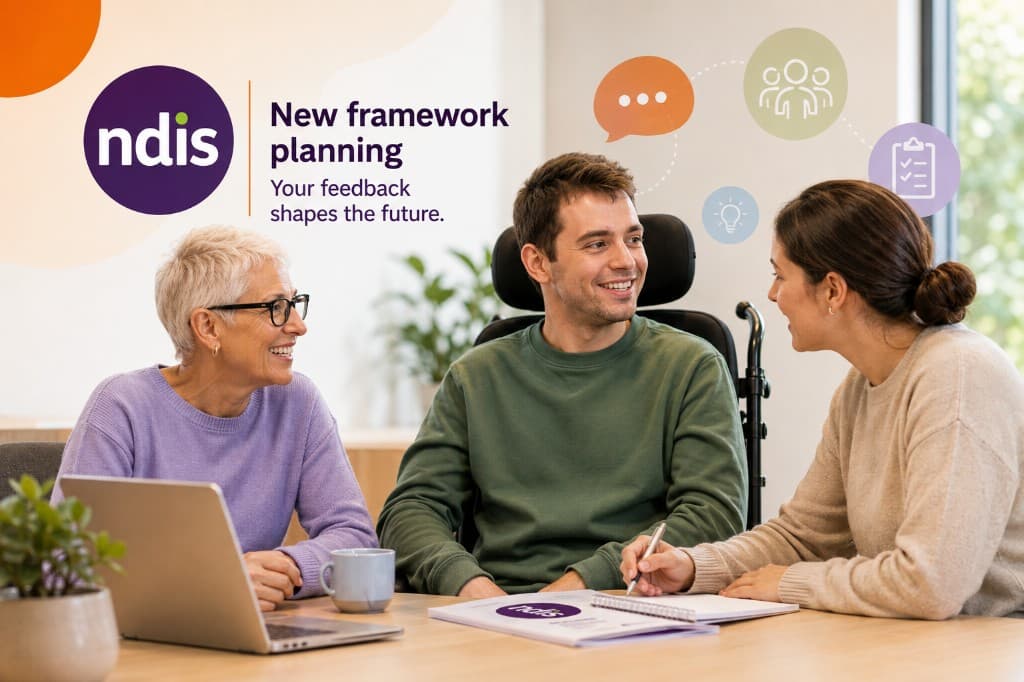
Between 23 January and 6 March 2026, the Department of Health, Disability and Ageing ran a public consultation on the rules underpinning new framework planning for the National Disability Insurance Scheme (NDIS).
People with disability, their families and carers, advocates, service providers, peak bodies and members of the public were invited to share their views on how the new planning arrangements should work.
The Department has now released a summary of what it heard and how that feedback is being used to shape the next stage of the reform. Here is a rundown of the key themes and what participants and providers can expect next.
Why this consultation mattered
The Government has framed the broader NDIS reform agenda around making the Scheme fairer, more transparent, more sustainable and more person-centred.
New framework planning, covering how support needs are assessed, how budgets are set and how plans can be used and varied, sits at the centre of that agenda.
Getting the rules right, and getting the sector's buy-in, was always going to depend on genuine engagement with the people the changes affect most.
What people told the Department
Feedback clustered around six broad themes.
1. Communication and information
People asked for materials in Easy Read, translated, plain-language and screen-reader accessible formats, along with more meaningful engagement on the design of the reforms themselves.
2. Assessments and evidence
A strong theme was the support needs assessment process itself: who conducts it, whether assessors understand disability, whether assessments are trauma-informed and culturally safe, and whether the tools used are properly validated.
Many respondents wanted assurance that assessments would capture the reality of living with disability, including "hard days" and how needs can change over time, and that evidence from long-term treating practitioners would be given appropriate weight.
3. Transparency and decision-making
Respondents wanted to understand how assessment results translate into budgets, including the weightings behind any scoring model. They also pushed for greater funding flexibility and stronger review and appeal rights.
4. Budgets and supports
Closely related, this theme covered concerns that funded supports might be used to replace informal or family care, and calls for informal carers to be recognised as part of a participant's support arrangements rather than as a substitute for funding.
Respondents also raised regional gaps in service availability and asked for budgets to reflect the practical realities of accessing supports in different parts of Australia.
5. Safety, carers and ongoing support
People wanted assurance that they could have a support person, interpreter or advocate involved throughout the process, along with better recognition of carers and more practical support after a plan is approved.
6. Operational and administrative processes
This included calls for clearer communication about NDIA processes and timeframes, flexible ways to complete assessments, whether in person, online or across multiple conversations, choice of assessor, clarity on transition arrangements and, notably, more information about the use of automation and AI in administrative decision-making.
How the Department has responded
The Department's summary sets out both immediate actions and commitments for later in 2026.
A further public consultation is scheduled for August to October 2026, covering:
- how a participant's disability support needs will be assessed
- how reasonable and necessary budgets will be developed
- how participants can use their plans
- how new framework plans can be changed.
Exposure drafts of the new NDIS rules are also expected later in 2026, giving the community an opportunity to see the proposed wording before the rules are finalised and how earlier feedback has been incorporated.
A new assessment tool is being developed by the University of Melbourne and the Centre for Disability Studies, based on the Instrument for the Classification and Assessment of Support Needs (I-CAN v6). It is being tested and validated with participants.
Test support needs assessments are also underway so the NDIA can refine the assessment and budget rules using real-world experience.
Budget method calculations are expected to be published in detail through the rules, with further information to be released once testing is complete.
Participants will retain review and appeal rights where they disagree with a decision. They will also be able to have a support person, family member, nominee, advocate or interpreter present during assessments.
Feedback about assessor workforce capability, cultural safety, planning processes and post-approval support has been passed to the NDIA to inform its operational planning.
The Department has also confirmed that new framework planning is intended to move towards a more person-centred budgeting model rather than one built up from the cost of individual supports. The aim is to give participants greater flexibility and choice over how they use their funding.
What this means for the sector
For providers, advocates and participants, the practical takeaway is that the rules are still being developed, tested and consulted on.
The next phase of consultation is scheduled across August to October 2026, with exposure drafts and further detail about assessment and budget methods expected as the reform process continues.
The Department has also flagged that automation and AI may play a role in administrative processes such as claims handling, but says safeguards will apply and further detail will be set out through the rules. This is an area worth watching closely as exposure drafts are released.
For participants who need help understanding how changes to planning may affect their current supports, NDIS Support Coordination can help with understanding, implementing and reviewing a plan as the broader reform process develops.
Organisations supporting NDIS participants should continue watching the Consultation Hub and consider subscribing to the NDIS Reform subscriber list to stay across exposure drafts, consultation opportunities and rule changes as they are published.
Source
Department of Health, Disability and Ageing, NDIS rules: Public consultation new framework planning – how feedback was actioned, published 14 August 2026.